
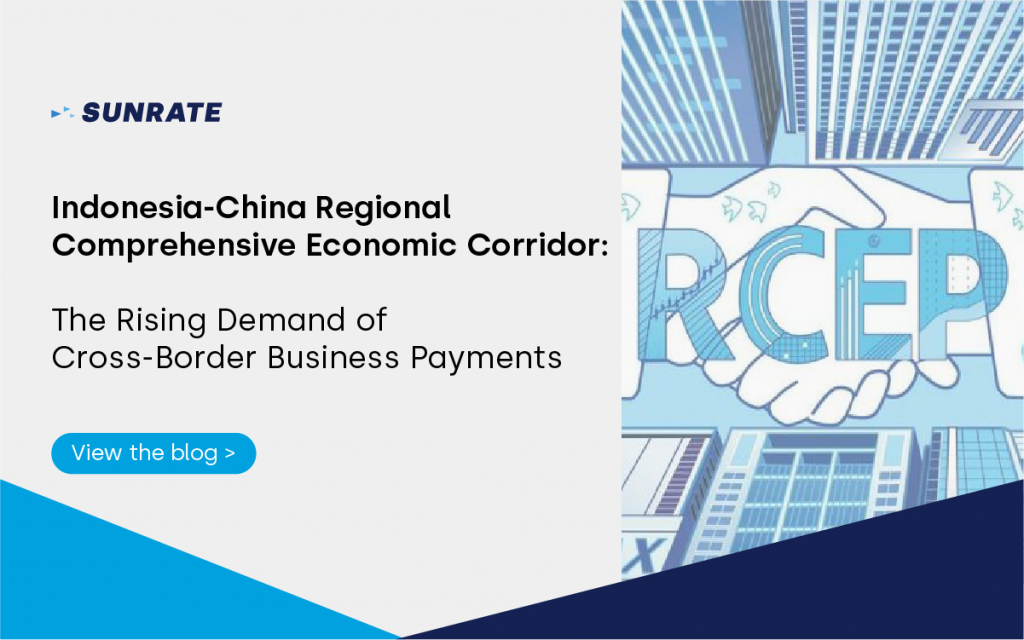
The Indonesia-China Regional Comprehensive Economic Corridor is a clear example that China has become Indonesia’s largest trading partner and a significant investor in the country, fostering closer economic cooperation and becoming one of Indonesia’s top three foreign investors. The two countries would deepen the integration of industrial chains and supply chains, and jointly promote the construction of a “regional comprehensive economic corridor.”
As an emerging global economic force, Indonesia’s participation in the Belt Road Initiative (BRI) aligns with its aspirations for continued development and regional leadership. With their respective economic strengths, China and Indonesia have valuable assets for increasing cooperation and chasing shared interests through Belt and Road. The BRI’s emphasis on regional connectivity and economic cooperation aligns with Indonesia’s goals and presents opportunities for everyone to win. China is the biggest economy in the Asia-Pacific region, and Indonesia is the biggest economy in ASEAN, as well as a G20 member. China supports ASEAN to maintain its strategic autonomy and unity, while Indonesia helps China better cooperate with ASEAN, promote regional integration and build an Asian community with a shared future.
Despite current macroeconomic uncertainties, Indonesia’s businesses are brimming with optimism. The upbeat outlook is supported by companies ready to adopt initiatives for growth, including the digitalisation of businesses to increase efficiency and diversifying revenue streams. Indonesia remains competitive – in terms of its cost, young labour force, and infrastructure – all of which are beneficial for businesses. Despite being more affected by inflation compared with their ASEAN peers, Indonesian companies remain optimistic about the business environment. When it comes to driving future growth, digitalisation, developing new sources of revenue and re-skilling talent are the top three business priorities that were cited.
The appeal of overseas expansion is strong for most Indonesian businesses. Cross-border digital trade platforms have particularly captured the interest of companies, especially in the business services sector. At SUNRATE, we are committed to empowering companies worldwide to operate and scale both locally and globally so that businesses can unlock their full potential, especially in the dynamic landscape of the ASEAN region. From cross-border trade and B2B payment support to treasury management, SUNRATE offers tailored solutions, industry knowledge, and market expertise with the aim for businesses to scale locally and globally in a more cost-efficient and timely manner. This is exceptionally crucial to Indonesia where it will help to further accelerate overseas expansion of businesses regionally and globally.
With the upcoming Indonesia-China Regional Comprehensive Economic Corridor, this will also likely quicken the pace at which businesses offer and accept B2B digital payments. At SUNRATE, businesses are able to move funds across borders in near real-time and this is made possible with SUNRATE’s global payment network in over 190+ countries and capability to simplify B2B trade by lowering costs with real-time, transparent and competitive foreign exchange rates.
With its global business headquarters in Singapore and offices in Kuala Lumpur, Jakarta, Hong Kong, Shanghai, and London, SUNRATE partners with the top global financial institutions, such as Citibank, Standard Chartered, Barclays and J.P. Morgan. SUNRATE is also the principal member of Mastercard and Visa.
Moreover, SUNRATE is focused on the emerging underserved segments such as small and medium-sized enterprises (SME) and leverage new digital capabilities and operating models to deliver faster and more cost-effective solutions as compared to the correspondent banking model dominated by the incumbent banks.
This is particularly important as Indonesia is set to become one of the world's fastest-growing e-commerce markets. Local e-commerce powerhouses such as Tokopedia and Bukalapak, have been instrumental in dramatically reshaping Indonesia's digital economy. SUNRATE seeks to make B2B cross-border payments more seamless, fostering economic growth, financial inclusion, and global integration. The offerings by SUNRATE – its cutting-edge infrastructure, global network, and unified solutions, will empower (not just Chinese) businesses looking to scale into Indonesia and the region, but also further fuel the construction of the Indonesia-China Regional Comprehensive Economic Corridor.
To find out more about SUNRATE Indonesia, please visit here.
Share to



When e-commerce scaled in the early 2000s, the infrastructure providers that captured disproportionate value were not the ones with the most merchants or the most consumer relationships. They were the ones that built the payment rails, the fraud detection networks, and the settlement infrastructure that every merchant and every transaction depended on. The value flowed […]


The shift toward autonomous agentic commerce is reshaping how B2B platforms handle value movement, buyer-seller discovery, and transaction execution. While consumer commerce relies on quick UI friction reduction, B2B procurement operates on structured approvals, complex credit arrangements, multi-currency treasury constraints, and rigorous compliance standards. As enterprise AI agents evolve from read-only research tools into active commerce […]

Across enterprise procurement functions, a pattern is emerging that should concern every CFO, CPO, and Head of Compliance paying attention. AI procurement agents — deployed to automate supplier discovery, purchase order generation, invoice matching, and payment initiation — are operating in production environments where the governance frameworks that should define, constrain, and audit their behaviour have not yet been established. This […]
We hope to use cookies to better understand your use of this website. This will help improve your future experience of accessing this website. For detailed information on the use of cookies and how to revoke or manage your consent, please refer to our < privacy policy >. If you click the confirmation button on the right, you will be deemed to have agreed to use cookies.


