
In the rapidly evolving landscape of B2B payments, a powerful trend is emerging that promises to revolutionise the way businesses handle their financial transactions. Enter commercial cards – the next big opportunity in B2B payments. These specialised payment solutions, designed specifically for corporate use, are gaining significant traction as businesses recognise their potential to streamline operations, boost efficiency, and optimise cash flow.
Gone are the days of relying solely on traditional payment methods like checks or wire transfers. Commercial cards offer a modern, digital alternative that brings a host of benefits to the table. From improved expense management to enhanced security, commercial cards are reshaping the B2B payment landscape, presenting businesses with an exciting opportunity to embrace innovation and drive their financial processes to new heights.
Understanding commercial cards
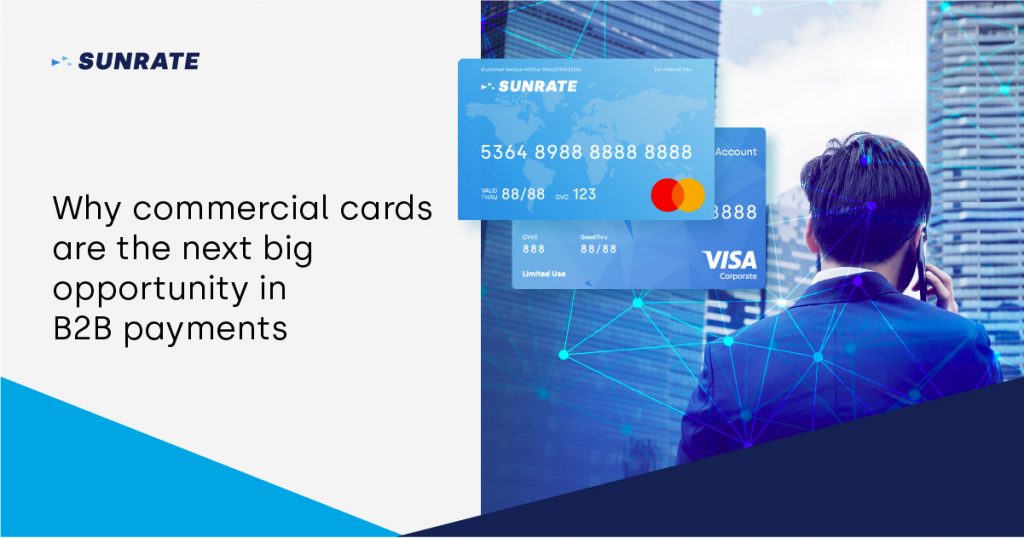
Commercial cards are specialised payment solutions tailored for B2B transactions. Commercial cards offer businesses a convenient and efficient way to make payments, manage expenses, and control spending. These cards are specifically designed to meet the unique needs of businesses, providing features like enhanced security, detailed reporting, and customisable spending controls. Whether it is paying suppliers, managing travel and entertainment expenses, or automating recurring payments, commercial cards offer a versatile and streamlined approach to B2B payments. By leveraging the power of technology and embracing the digital revolution, commercial cards are poised to become the catalyst for transforming the way businesses handle their financial transactions, making them a compelling opportunity in the realm of B2B payments.
Advantages of commercial cards in b2b payments
The adoption of commercial cards in B2B payments brings forth a multitude of advantages that have the potential to revolutionise the way businesses operate. One of the primary benefits is enhanced efficiency and convenience. Commercial cards enable businesses to make payments swiftly, eliminating the cumbersome process of issuing and reconciling checks. Moreover, they offer streamlined expense management by capturing detailed transaction data, simplifying record-keeping and reducing manual paperwork. Another advantage lies in improved cash flow and working capital. Commercial cards provide businesses with extended payment terms, allowing them to optimise cash flow and allocate resources more effectively. Additionally, these cards offer enhanced security features, such as tokenisation and real-time fraud monitoring, mitigating the risks associated with payment fraud. With their ability to enhance operational efficiency, optimise financial management, and ensure secure transactions, commercial cards present businesses with a transformative opportunity to streamline their B2B payments and drive growth in an increasingly digital landscape.
Overcoming challenges and addressing concerns
While commercial cards present a promising opportunity in B2B payments, it is essential to address the challenges and concerns that businesses may encounter during implementation. One significant challenge is ensuring widespread acceptance and adoption by merchants. Businesses need a robust network of merchants willing to accept commercial cards, particularly for larger transactions. Another concern is managing spending controls effectively. It is crucial for businesses to strike the right balance between empowering employees with purchasing flexibility and maintaining financial discipline. Integrating commercial cards with existing financial systems can also pose challenges, as businesses must ensure seamless integration with accounting and Enterprise Resource Planning (ERP) systems to streamline reconciliation and reporting processes. Additionally, compliance and regulatory considerations, such as data security and privacy regulations, must be thoroughly addressed to safeguard sensitive information. By proactively tackling these challenges and concerns, businesses can unlock the true potential of commercial cards, harnessing their benefits while minimising any potential obstacles in the path towards embracing this next big opportunity in B2B payments.
SUNRATE’s commercial card
About SUNRATE
SUNRATE is a global payment and treasury management platform for businesses worldwide. Founded in 2016, SUNRATE has been recognised as a leading solution provider and has enabled companies to operate and scale both locally and globally in 190+ countries and regions with its cutting-edge proprietary platform, extensive global network, and robust APIs.
With its global business headquarters in Singapore and offices in Hong Kong, Jakarta, London, and Shanghai, SUNRATE partners with the top global financial institutions, such as Citibank, Standard Chartered, Barclays, J.P. Morgan. SUNRATE is also the principal member of Mastercard, Visa, and UPI. To learn more about SUNRATE, visit https://www.sunrate.com/.
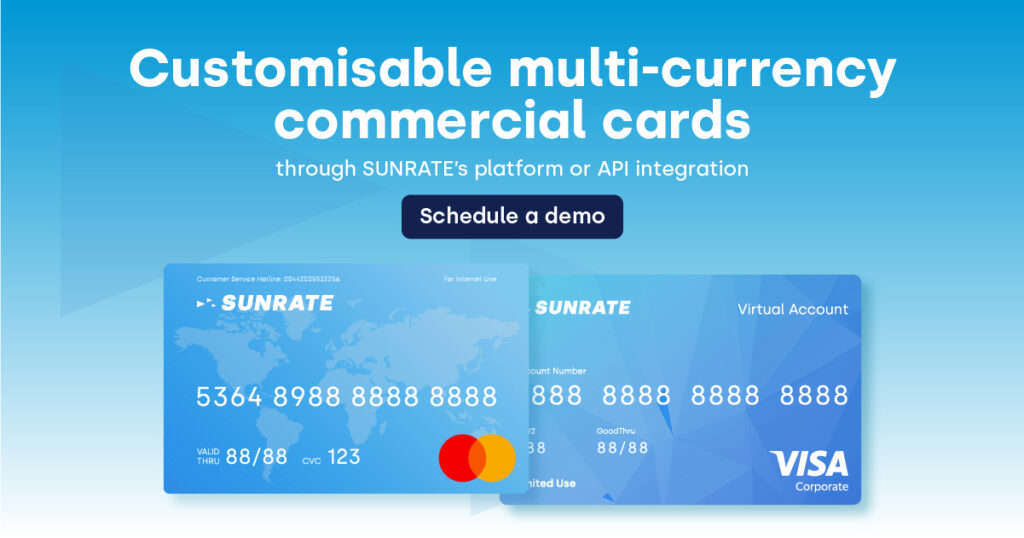
Speak to our specialist today find out more about our commercial cards.
Share to



When e-commerce scaled in the early 2000s, the infrastructure providers that captured disproportionate value were not the ones with the most merchants or the most consumer relationships. They were the ones that built the payment rails, the fraud detection networks, and the settlement infrastructure that every merchant and every transaction depended on. The value flowed […]


The shift toward autonomous agentic commerce is reshaping how B2B platforms handle value movement, buyer-seller discovery, and transaction execution. While consumer commerce relies on quick UI friction reduction, B2B procurement operates on structured approvals, complex credit arrangements, multi-currency treasury constraints, and rigorous compliance standards. As enterprise AI agents evolve from read-only research tools into active commerce […]

Across enterprise procurement functions, a pattern is emerging that should concern every CFO, CPO, and Head of Compliance paying attention. AI procurement agents — deployed to automate supplier discovery, purchase order generation, invoice matching, and payment initiation — are operating in production environments where the governance frameworks that should define, constrain, and audit their behaviour have not yet been established. This […]
We hope to use cookies to better understand your use of this website. This will help improve your future experience of accessing this website. For detailed information on the use of cookies and how to revoke or manage your consent, please refer to our < privacy policy >. If you click the confirmation button on the right, you will be deemed to have agreed to use cookies.


